The English tea ceremony

I once watched my father-in-law making a pot of tea, and it was a fascinating study in the futility of any efforts we make in terms of energy saving.  It went something like this:

  1. Completely fill kettle
  2. Allow kettle to boil and turn itself off
  3. Switch kettle on again to ensure that the water is truly boiling, allowing it to turn off automatically
  4. Use some of the hot water from the kettle to “warm the pot”
  5. Switch the kettle on again just to be sure, waiting until it switches off at a vigorous boil
  6. Pour the water into the teapot
  7. Refill the kettle and switch on again to provide hot water lest it be necessary to top up the pot
  8. After suitable time for brewing, pour tea
  9. Switch on the kettle again to ensure that the refill water is truly hot, waiting until it switches off
  10. Refill teapot

By the time all of this has been done, we have used something like twice as much energy as was actually needed to make the required quantity of tea. The rest of the energy has been wasted as latent heat in boiling water, heating water that wasn’t needed and reheating water that wasn’t used as soon as it was available.

I was at a Cambridge Cleantech meeting a couple of weeks ago, and despite being associated with energy and smart meters for a few years, it provided a sudden blinding realisation on the disinformation associated with smart meters.

In order to have the joy of a smart meter we, as domestic consumers, are set to spend around £15b, which will no doubt be more than £20b when it happens.  The official analysis suggests that this will be offset by benefits – but the margin between cost and benefit is very narrow, and almost certainly less than the error in numbers inevitably distorted by the political requirement to justify the policy.  A large component of the supposed benefits is related to the energy saving effect of smart meters…

…which takes me back to the English tea ceremony.  The installation of a smart meter will not of itself significantly influence the behaviour of my father-in-law, and in truth will have very little direct effect on energy consumption overall.  The energy saving benefit is a fallacy.

I suspect that the primary effect of the smart meter will be to assist the energy supplier to bamboozle the consumer with complicated and incomprehensible tariffs, presenting attractive looking deals and stinging the customer who fails to play the game.  It’s a common model in consumer pricing, as evidenced by budget airlines, mobile phones and banks.  This all works out well for the utilities, as consumers are forced to pay for the tools which will be used to manipulate them.  Any overspend (which will undoubtedly happen in a complicated IT and communications system) will be subsidised by the Government (and therefore by the taxpayer), and the utility cartel will sit back and exploit the benefits.

Let me make it clear that I am not against smart meters and smart grid.  These are tools which should enable utilities to provide reliable energy supplies in the most cost-effective way, and are fundamentally a good thing.  What is not so good is taking consumers for a ride and pretending it’s all good for them.

Further reading on energy use of kettles: https://www.sciencedirect.com/science/article/pii/S0306261916303579
So 42 isn’t the answer, and Venture Capital probably isn’t either

I had two interesting evening engagements last week – although they arguably had a common link, they provided two very different approaches to looking at the future.

Cambridge Wireless Inaugural Prestigious Lecture – Herman Hauser

I was present at this event in the glorious Møller Centre to support Blendology’s connectivity product in a trial with Cambridge Wireless. The attendees were indeed prestigious, and who could be more prestigious as a presenter for this inaugural lecture than Herman Hauser. In his talk entitled “What next in Communication?” he started by telling us his secret for foretelling the future.  He has spent years looking for the pattern, and at last he has found it.  It’s totally random.  So now we know.

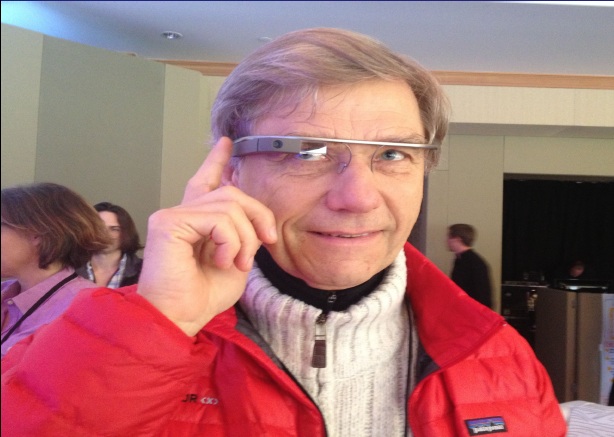
We were guided through history, with a reminder that (for some of us) communication at 110 baud was not that long ago.  Let me drop in a few keywords and history will provide the final judgement:Hauser Google Glasses

  • Optical Burst Switching
  • Internet of Things
  • Envelope tracking power amplifiers
  • Femtocells
  • Game changing UIs – touch, voice, gaze
  • Machine learning
  • MOOCs

One interesting point he made was that machines have displays and we don’t – I’m not sure I’d totally agree.  Another important message I took away was that in any control system the response time of the control loop must be considerably better than that of the entity it’s controlling – this is an important one for economists to ponder.

Funding & Venture Capital for Technology Companies

It’s the first time I’ve heard professionals (except perhaps the emergency services) advising potential customers to avoid their services, but this was the message from Simon Cook, Alex van Someren and Laurence Garrett, in a session chaired by Alex McCracken of Silicon Valley Bank. It was refreshing to hear such honesty about what we all really know – these guys are in it to make money. If you go to them, you will pay with a large part of your business.  If you can find any other way of funding your activities, then do it. Customers were highlighted as the most important source of funding. Another source mentioned was crowd funding – good for market testing of an idea.

The point was made, as it is so often, that Cambridge is good at ideas, but not so good at commercialisation.

My takeaway was a reminder that we all find it difficult to give up an idea. The opportunity cost in life is high – know when to give up. That’s a good one to bear in mind.

On Cows and Sewers

Cambridge Wireless Connected Devices SIG “I Don’t Use Wireless Yet – What Can It Do For My Business?”

Life is like a sewer – what you get out of it depends on what you put into it. Tom Lehrer US humorist.

diagram courtesy of Pearson Scott Foresman / Wikimedia commons

Yesterday I spent an interesting afternoon at Cambridge Consultants learning and talking about the future of connected devices – and the likelihood of of sharing the world with 50 billion of them.  The afternoon turned out to be a bit of an old-boys (and sadly it was mostly boys) reunion.  I met ex-colleagues from my days at Origin, Symbionics and Qualcomm, some of whom I haven’t seen for around 15 years, along with putting faces to some names I knew from my Sentec days.

We had some excellent and interesting presentations:

  • a good analysis from Tim Ensor of CCL on how we might get to 50 billion connected devices, half of which are “foreseeable”, and the other half “aspirational”
  • a review of technology uptake by Steve Kay of Anglian Water, along with the gloriously named Sewernet, aiming to create smart sewerage.  It always surprises me when I’m reminded of how conservative the water industry has been in uptake of technology (but it also surprises me that it’s impossible to send an email to HMRC)
  • insight into smartphone security by Laurent Simon from the Computer Labs.  In essence the message seems to be buy iPhone if you care about security.  This rather depressing message was particularly relevant to the next presentation…
  • a very professional presentation by Craig Tillotson of Faster Payments, about the soon to be released pan-industry mobile payments system, allowing us to use our mobiles to pay anyone for whom we have a mobile phone number.  A noble goal, but to the uninitiated there seems to be a whole bunch of issues in relation to privacy and security
  • last, and certainly not least, the remarkable story of Well Cow as told by David Tagardine of TTP – wireless telemetry straight from the stomach of a cow. The physical scale of the wireless bio-sensors swallowed by cows was truly impressive

I certainly hadn’t been expecting to learn a lot of gory detail about bovine digestive anatomy and sewers. I had been expecting to hear a lot more about internet connected “things” such as thermostats and other sensors, smart grid, smart appliances (the ubiquitous internet connected fridge did get a mention), and about technology enablers for making radical reductions in device cost, so I was surprised but certainly not disappointed by the afternoon.  Thanks Cambridge Wireless for a fascinating afternoon.

Making it Tangible

Not long after my last post about selling design services I saw an announcement from my old company Sentec – they have produced a reference design for a compact home monitor, just in time for the Consumer Electronics Show (CES) in Las Vegas. This has become MicroMonitor http://www.sentec.co.uk/news-and-events/news-archive/Sentec-launches-MicroMonitor-sensing-technology-platform-for-smart-homes.

MicroMonitor is a very cute approach to communicating the abilities of a company. It’s a reference design or platform, not a product – you’re not likely to be able to buy one, but what a fabulous way to demonstrate the meaning of design services and intellectual property. Showing this to a customer, and more impressively showing it working is infinitely more convincing than any number of Powerpoint slides, however passionately presented. Whether at a trade show or a sales presentation, when they see something like this customers will instantly understand what you can do for them – and they will believe that you have the ability to deliver it. Most people find it much easier to relate to a thing than to an idea. This is a great example of engineering and marketing working together.

And the results?  After writing the above I got some feedback from my friends at Sentec on the outcome of taking these little devices to CES.  I was really pleased to hear that the experience did indeed support my argument – it was ‘a huge success’ and ‘generated a huge amount of leads’.  Many of the leads were for consultancy not directly related to the devices themselves but ‘because it was a TANGIBLE showcase of our skills, not just PowerPoint engineering!!’  Great results, but don’t forget it’s taken a lot of hard work to get to this point, and to get a real pay-back there’s a lot more work yet to come.

I am very happy that I played a very small part in the development of this little device, exactly a year ago, while walking the floor at CES 2012. We were trying to sell Sentec’s intellectual property and product design services in power measurement. Talking to potential customers and taking inspiration from some of the exhibitors’ products an idea began to gel, and we had sketches for the concept.  Well done to the guys for going all the way, and developing the marketing backup to go with it.


The Secret of Design Services Sales

One way or another I’ve been selling electronic and software product design services for 25 years. Over that time I’ve watched how other people do it, and I’ve tried to learn from my mistakes – so I’ve had a lot of opportunity for learning. From time to time I find myself wondering about the process. Where do the customers come from? How should we go about finding new customers? What’s it all about?

Right product, right time, right place….

The salesperson's crystal ball
The salesperson’s crystal ball

To make the sale you must have what the customer wants, at a price that makes business sense and you must be in the customer’s mind at just the right time. None of these parameters is easy to define. Services are intangible, and the customer often doesn’t have a clear idea of the real needs. With these uncertainties, price, cost and value are all difficult to tie down. But for me, the biggest challenge is to find the right customer and then to talk to them at the right time.

Finding those customers

New customers might come as a result of:

  • Cold calling/email messaging
  • Web site
  • Exhibiting at trade shows
  • Presenting at conferences
  • Reputation
  • Word of mouth

These are all vastly more effective if there is a clear focus in the offering. This can take the form of:

  • Technical speciality
  • Market sector speciality
  • Leverage of intellectual property or product offering
  • Projecting the company as a domain expert and thought leader

Focus

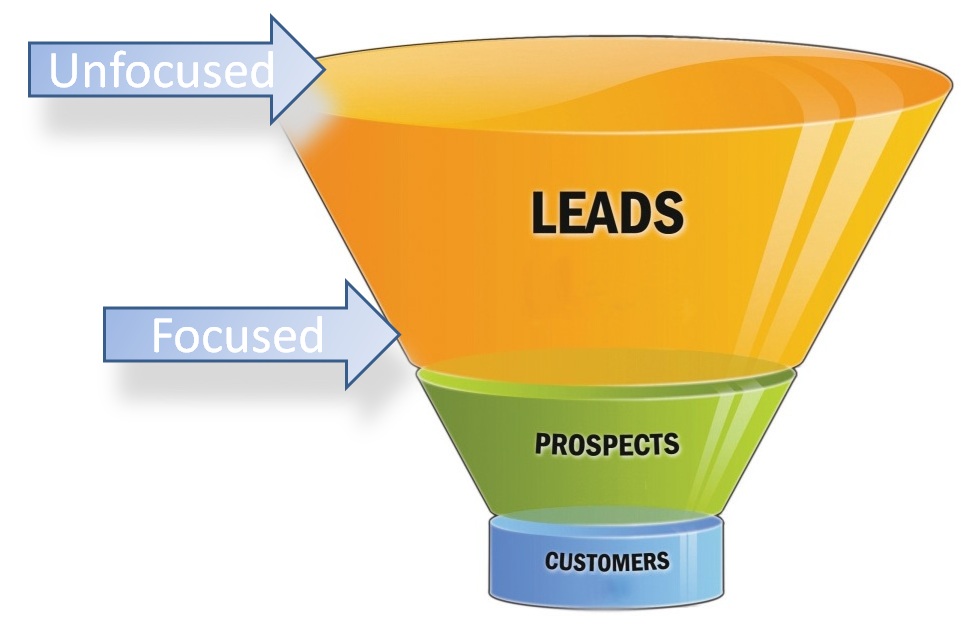
The sales funnel
The Sales Funnel

The effective deployment of the right combination of these will define and differentiate the company, and make it far more likely that customers will call in when they have a requirement – in my experience the conversion rate on this sort of enquiry is very high. Sales remains a numbers game – we need to put the numbers into the top of the sales funnel to get the sales out of the bottom. But well-applied focus changes the odds, effectively injecting the leads further down the funnel.

Of course, all of this is called marketing.

The big reveal

Marketing - the secret weapon of sales
Marketing – the secret weapon of sales

The secret of design services sales?  There is no secret, and it’s not about sales. Get the marketing fundamentals right and the rest will follow.


Trusting your instinct

We’ve all been there – a well reasoned plan.  It’s been carefully honed to come in with the right costs and timescales.  There’s nothing there you can obviously argue with, but you know deep down that when you put it all together there’s no way the plan is realistic.  Here’s the dilemma – with the plan you’ve got the project will probably go ahead, and ultimately overspend.  If you re-plan with numbers that feel right it’ll get canned.  Your instinct is shouting at you and mine has proved to be pretty reliable in these situations. So do you keep quiet, go with the flow and tell everyone how wonderful the emperor’s clothes are looking, or speak up….

….so now a tenuous link to Discovering Start-Ups 2012 last week.  I was there in the role of VP Business Development for Blendology.  With both the Chairman and CEO doing the pitch, I was a bit of a spare part most of the time, which gave a rare opportunity to enjoy the event.  The judges were rating the pitches on an absolute scale, rather than one against the other.  I ran my own private judging, based purely on instinct.  To avoid bias I excluded Blendology from my list.

Discovering Start-Ups 2012 (Picture courtesy Cambridge Wireless)

The pitches and pitchers were impressive, but for my judging system they fell neatly into a few categories:

  • game-changing, but maybe too good to be true
  • incomprehensible
  • possibly sensible but not very exciting
  • works for me

Clearly I’m not destined to become one of the great and the good appearing in judging panels for this sort of event, because only one of my top five appeared in the official winners’ list.  That was Skin Analytics, which was addressing a real need with a believable solution.

Well done to the winners, and good wishes to all the competitors.

I wonder whether it will be my instincts or the judges who will be proved right.  Well, let me wrap up with a confession on how wrong my instinct has been on the odd occasion.  Many years ago Psion Software was a major client.  I heard their tale of developing an operating system for mobile phones, and was very happy to continue to sell to the nascent Symbian organisation, but I openly admitted my scepticism on their world domination plan.  On that one I do feel a bit like the record producer who didn’t rate the Beatles.  Ironically, Symbian eventually purchased our business unit, and my team formed the core of Symbian’s Cambridge office.

Link to article telling us to trust our instincts:

http://www.managementtoday.co.uk/news/1340286/why-go-gut/

…and on the other side, Martha Lane Fox says “Don’t trust your gut”:

http://www.bbc.co.uk/news/technology-38742762

Enterprise Tuesday – how do people recognise an opportunity that is worth pursuing?

It was standing room only for this first Enterprise Tuesday of the year, and an intriguing story we all heard. It goes like this.

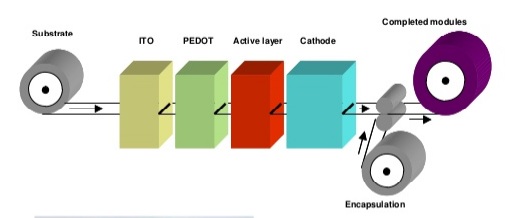
Roll-to-roll solar cells

Professor Sir Richard Friend has been working on technology which enables printable plastic solar cells. These present advantages in manufacture and deployment, are potentially cheap and reasonably efficient. Eight19 was formed to develop this technology, and the work is progressing nicely.

So, where to apply it?  The three options suggested in the presentation were:

  • Building-integrated solar – using architectural features to generate electricity
  • Consumer solar – the market currently supplied predominantly by Chinese manufacturers, and only viable with Government grants
  • Emerging markets – off-grid in developing countries

The counter-intuitive decision taken was to follow the last of these. People in developing countries might not individually have a lot of money, but there’s a lot of them, and they have an appetite for electricity for lighting and to power their mobile phones, which in many cases are used not just for communication, but also for financial transactions.

So far so good, but now the slightly strange part of the story. The plastic film solar material is not yet market ready – work is still required to give it a decent lifespan. So, Azuri was set up to address this emerging market, not with plastic film solar material, but with conventional solar panels. It rather reminds me of what someone once said of moving into self-employment – if you’re going to start one company, you might as well start two, because it’s not that much more difficult, and you spread the risk.

So the outcome is two parallel threads, one developing a new technology, and the other developing the market that the technology might address, but with current-day technology. I guess it makes sense, but the guys had the humility to admit that they only got to that point with a lot of iteration. Great to hear some honesty rather than claims to have known the answer from the beginning.

So I guess the lesson from this one is, if at first you don’t succeed, try something else that might work better. And it also struck me that this company was a very good illustration of how a good team exploits people with very different talents, rather than clones. Sir Richard is the technical expert, Seena Rejal is the bright young guy building connections in high places, and Simon Bransfield-Garth is the seasoned businessman. Incidentally, many lives ago Simon was my customer – I well remember that he was very patient and pragmatic when things didn’t quite go as well as expected, which in the long run led to a good outcome for both parties.

Ogilvy Storytelling Lab Day

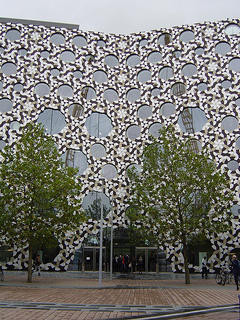
Ravensbourne

I was manning the Blendology stand at the Ogilvy Storytelling Lab Day a couple of weeks ago.  A very lively day, with many interested visitors to the stand – still working on the follow-ups.  I really hadn’t heard of Ravensbourne before this event.  It’s a pretty cool place, located just outside the main entrance of the O2, with a speciality in digital media.  We were located just inside the front door, so our visitors were not limited to the attendees of the lab day.  Many of the students dropped in to see what we were about – they are very much in touch with the digital world.

The event gave plenty of food for thought about the value of the data generated by Blendology’s connectivity system, and the free gift of the book “Sexy Little Numbers” by Dimiti Maex of Ogilvy is good inspiration too.  It’s really about big data, but many of the questions asked are transferable to the challenge of extracting actionable value from the knowledge of who connected with who at an event.  I’m looking forward to seeing some of Blendology’s development of the data visualisation.

Extreme innovation and dogs

Paddy Lowe, Technical Director of the McLaren Formula One racing team

There was a great turnout for the Cambridge Network event at Robinson College last week, where Paddy Lowe gave a hugely interesting presentation followed by a lively Q&A.

https://www.cambridgenetwork.co.uk/events/mclaren/

I came away with three notable points:

  1. Paddy Lowe admitted his reservations about the “win every race” mission statement for McLaren Formula One, in which the the team is bound to fail. Should we reach for the unattainable, or have realisable goals? The McLaren approach seems to have worked out so far.
  2. Formula One could be regarded as the ultimate environment for engineering innovation.  Should we be looking to emulate their process in our product developments?  I think yes and no.  A big breathless “yes, yes, yes” to the incredible focus on delivery timescales, quality and right first time.  But the measure of success in Formula One is simple – it’s reduced lap times. Most of us have to consider more fuzzy and low bandwidth parameters like customers, can’t afford the same single-minded pursuit of technical excellence and usually don’t have a good measure for that success.
  3. “Dog Time” is not a cuddle with your pooch.  It’s the time you have with an F1 gearbox to disengage the gear you’re in after the next one has been engaged – take too long, and it’s bye-bye gearbox. Gear-change in 0.05 seconds – wow, that’s quicker than my Fireblade!

Metering Europe 2012

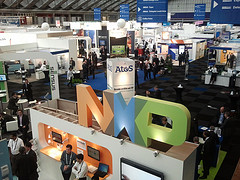
Metering Europe 2012

Interesting and enjoyable trip to the RAI, focusing mainly on smart homes.  There are plenty of companies talking smart homes, and a crowded market for in-home displays, but I still don’t see a lot of reality in home energy automation – closing the loop between measurement and control.  The big Japanese companies all have a very impressive array of shiny boxes, and there are many start-ups addressing this space but I was still challenged to find anything really real, installed into normal people’s houses.  It’s pretty challenging right now to come up with a good business case for the home-owner to invest in this area – this is one manifestation of a bigger problem in the misalignment of costs and benefits in the hierarchy of energy stakeholders, a theme discussed by Mark England, CEO of Sentec in his panel session.