


I recently wrote about the possibilities and limitations of electric vehicles as campervans – http://www.cliffdive.co.uk/plug-and-play/. My conclusion was that while there are some exciting possibilities for the future, the base vehicles are not yet suited for the long journeys that we typically make with our leisure vehicles. Electric vans are optimised for “last mile” deliveries for which they only require a range of 100 miles or less.
But there is a unique offering in the van marketplace with the Ford Transit Custom plug-in hybrid (PHEV). This is (at the time of writing, and to the best of my knowledge) the only van offered with a plug-in hybrid drive train.
How does it work?
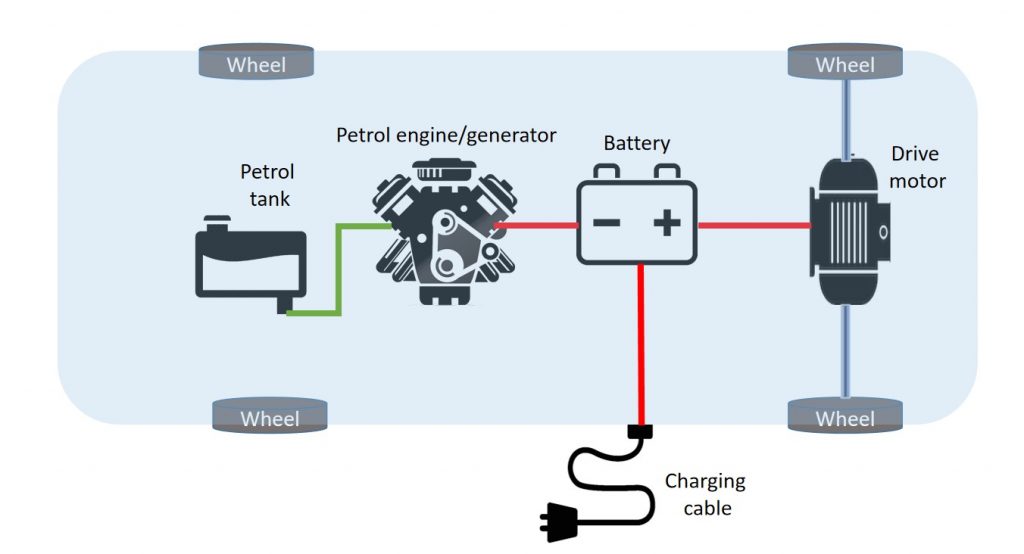
The van is always driven by its electric motor. Its battery can be charged from a normal domestic socket or a roadside charging point, just like a full EV, and it can do around 30 miles under battery power alone. Charging would take less than five hours via a standard domestic socket and much less at a charging point. But if you want to go further, there’s a petrol engine hidden in there too which can replenish the battery as you drive, giving you a total range of around 300 miles between fill-ups (which of course can be electricity or petrol). The driver can choose various modes of operation from full electric driving to battery charging mode (charging the battery while driving), or the system can work automatically, deciding the best mode at any time.
Would it work as a campervan?
The short answer is “yes”. Unlike the full-electric vans available right now, the range extender design offers an essentially infinite driving range without resort to a charging station. Your touring can take advantage of the full-electric capability for access to increasingly restricted city centres, and you can make quiet exits from campsites.
As discussed in my blog about full-EV vans, if Ford were to offer access to the traction battery, its 13kWh capacity would be more than enough to replace the conventional leisure battery, allowing a gas-free conversion, with electrical power used for cooking and the fridge. Unlike the full EV vans, you’d be fine for off-grid adventures too, because the range extender engine will recharge the battery without plugging into a mains outlet. All you need is petrol. And even better, you can stay cosy while camping using petrol (or gasoline if you’re American) for your space heating.
All in all this would make an excellent base for a conversion…
…if you don’t mind paying an additional £15,000 or so for all the technology.
Further reading
Brochure for Ford Transit Custom, including the PHEV