

It was standing room only for this first Enterprise Tuesday of the year, and an intriguing story we all heard. It goes like this.
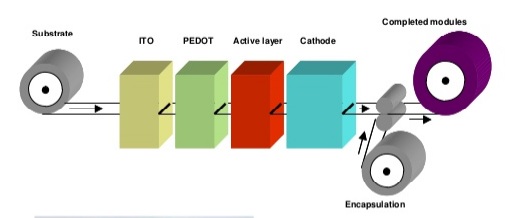
Professor Sir Richard Friend has been working on technology which enables printable plastic solar cells. These present advantages in manufacture and deployment, are potentially cheap and reasonably efficient. Eight19 was formed to develop this technology, and the work is progressing nicely.
So, where to apply it? The three options suggested in the presentation were:
- Building-integrated solar – using architectural features to generate electricity
- Consumer solar – the market currently supplied predominantly by Chinese manufacturers, and only viable with Government grants
- Emerging markets – off-grid in developing countries
The counter-intuitive decision taken was to follow the last of these. People in developing countries might not individually have a lot of money, but there’s a lot of them, and they have an appetite for electricity for lighting and to power their mobile phones, which in many cases are used not just for communication, but also for financial transactions.
So far so good, but now the slightly strange part of the story. The plastic film solar material is not yet market ready – work is still required to give it a decent lifespan. So, Azuri was set up to address this emerging market, not with plastic film solar material, but with conventional solar panels. It rather reminds me of what someone once said of moving into self-employment – if you’re going to start one company, you might as well start two, because it’s not that much more difficult, and you spread the risk.
So the outcome is two parallel threads, one developing a new technology, and the other developing the market that the technology might address, but with current-day technology. I guess it makes sense, but the guys had the humility to admit that they only got to that point with a lot of iteration. Great to hear some honesty rather than claims to have known the answer from the beginning.
So I guess the lesson from this one is, if at first you don’t succeed, try something else that might work better. And it also struck me that this company was a very good illustration of how a good team exploits people with very different talents, rather than clones. Sir Richard is the technical expert, Seena Rejal is the bright young guy building connections in high places, and Simon Bransfield-Garth is the seasoned businessman. Incidentally, many lives ago Simon was my customer – I well remember that he was very patient and pragmatic when things didn’t quite go as well as expected, which in the long run led to a good outcome for both parties.