


 Conversation at a recent meetup with motorhoming friends turned to continental travel. We’ve been taking various campervans to the continent for around 30 years, so I thought it might be good to jot down some of the things we’ve learnt in that time.
Where to go
There’s no right answer. We’ve most often gone to France, but have also visited Spain, Portugal, Hungary, Slovakia, Czech Republic, Germany, Belgium, Luxembourg, Holland, Italy, Switzerland, Austria, and Andorra. For us the default destination is the west coast of France. We particularly like to travel down until it gets warm, maybe in the Vendée (around Saint-Jean-de-Monts) or the Gironde (Lac Hourtin). The Camargue is pretty exotic (Saintes-Maries-de-la-Mer) and the Pyrenees are impressive both on the French and Spanish sides – we’ve been to Camping Rio Ara in Torla Ordesa a couple of times.
France is campervan heaven, and that’s what I will mostly talk about here.
Routes

We try to avoid toll roads (set your GPS to “no tolls”, but only after you’ve used the Dartford Tunnel to get to the Channel Ports). In France we take free autoroutes to miss big cities – the network of decent free roads has been increasing over the years. Otherwise we mostly travel N roads (similar to our A roads) which are usually uncrowded, and often interesting, or D roads (a bit like our B roads). In France toll roads are generally clearly marked as “Péage”.
We try to apply similar rules in other countries. We once came unstuck in Switzerland, where you have to buy a vignette to use the motorways. I was therefore being very careful to follow the green signposts to avoid the motorways. It was only as I went up the slip road that I realised the green signs led to the motorway! I exited at the first opportunity and got away with it.
Where to stay

We have done an entire holiday (late season) without staying at a single formal campsite. Options are:
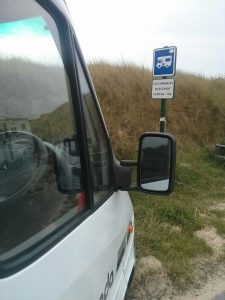 Aires – be careful, because motorway services are called aires, and they are a very bad place to stay. What you are looking for are Aires de Camping Car, or Aires de Service de Camping Car. Some aires de service are simply service points for filling and dumping, but many also include overnight parking. There are many guides available listing aires, but we mostly find them by chance. They might be located at historic sites (Carcassone springs to mind) or in towns or villages. They are usually clearly signposted off N roads. Some aires are like car-parks, others more like a proper campsite. They are sometimes free, but increasingly charge a few Euros. Germany’s equivalent is the Stellplatz, and Italy’s is the sosta
-
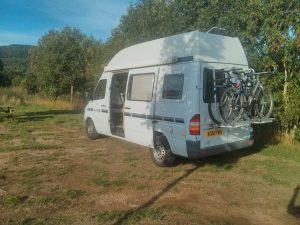
France Passion France Passion – the French version of Britstops, mostly featuring vineyards, but also other farms and restaurants. Subscribe for the year and park overnight for free – you might of course be tempted by the produce
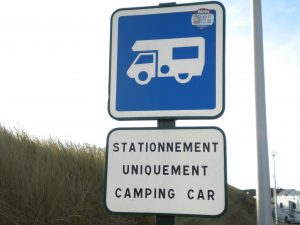
- Wild camping – the French motorhome (camping car) community is very keen on enforcing the right to park pretty well anywhere. We have parked on grass verges, lay-bys and car-parks both out of town and in the centre of small towns, and never had any problems. Obviously attractive stopping places like promenades might have prohibitions (saying something like interdit aux camping-cars), which we always respect. The important thing is that you are parking, not camping, and nothing other than the tyres of your vehicle touches the ground – no table, chairs, awning or windbreak. Some people use supermarket car-parks, but we’ve always found something nicer, like a cemetery. Be sensible and respectful and all will be well
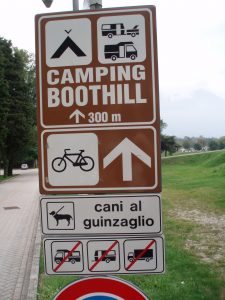 Campings municipals – well signposted small campsites in towns, usually with decent facilities at a modest price. These are very often unstaffed during the day (especially off-season). You pitch up somewhere sensible and someone comes along in the evening for your money
- Commercial campsites – as in the UK, these vary from the modest and reasonably priced, to holiday-camp type establishments. People talk about the ACSI card as a way of getting off-season discount but we’ve never bothered, because we mostly go for France Passion or aires
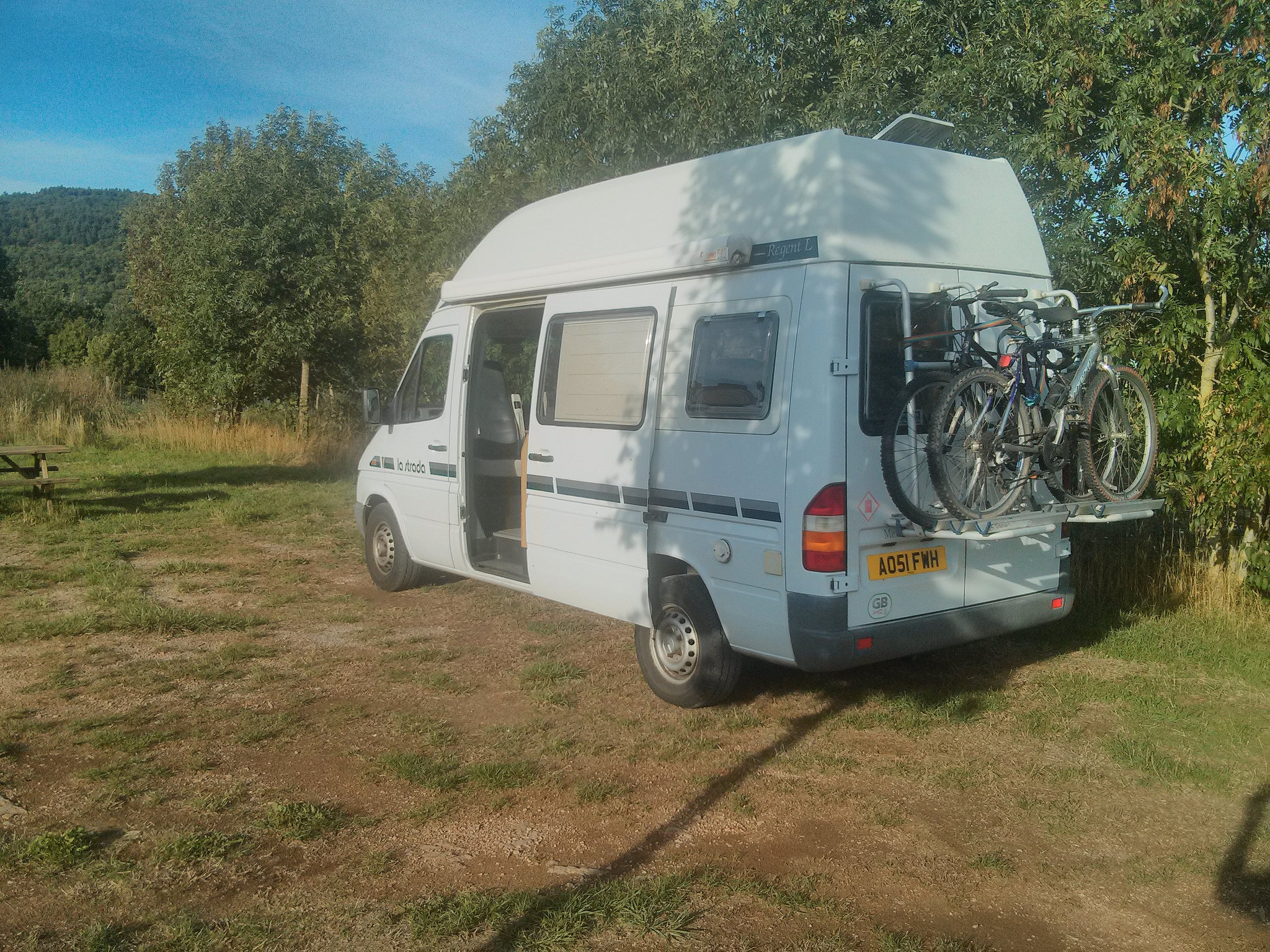
Driving

I’ve found driving in France mostly very pleasant. People can be aggressive in big cities, but I have received sympathetic treatment when I’ve had to make unusual manoeuvres. By default the name boards of towns and villages signify the start of the 50kph limit, and a crossed out version of the same thing signifies the end of the limit. Increasingly the centres of towns and villages have 30kph limits and traffic calming. I try to respect all speed limits at all times, which can irritate the natives (less in France than Italy or Portugal, where all drivers are crazy). Speed limits in France are lower when it’s raining. In most of Europe do not expect drivers in the nearside lane of a dual carriageway to get out of your way if you’re coming out of a slip road – quite correctly it’s your job to find a space and match your speed.
When we first went to France the priorité à droite rule was still pretty common – if you were travelling along a road, someone emerging from a side road on your right had right of way. This has become less common now, but still often applies in the centre of towns and on very minor roads – or supermarket car-parks. In general French drivers are not suicidal in their application of this rule, but use their horn for instructional purposes if you neglect their priority.
Fuel
France is well equipped with out of town supermarkets. Always buy fuel at these – it’s much cheaper than service stations. Beware the French lunchtime. Even quite large stores shut for a couple of hours. Nowadays fuel can often be obtained by card at these times – but don’t rely on it. Similar considerations apply to Sundays and public holidays – we’ve been surprised a few times.
Gas
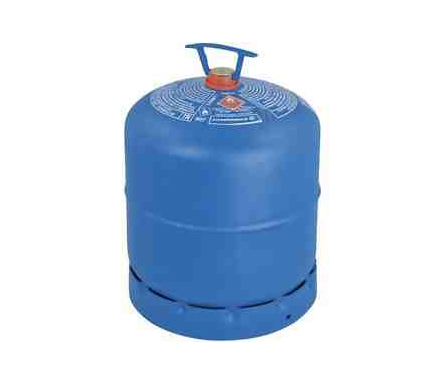 Camping Gaz is universally available in France from supermarkets and a host of other outlets. It’s also available in other parts of Europe. The downside is that even the big Gaz container is pretty small, and it’s butane, which doesn’t work in the winter. If you have a fixed or refillable gas tank I believe that Autogas availability is pretty good, but you might need a different adaptor – it’s not something I’ve done, so I don’t know any more. We tend to start with a full container of Calor propane and a couple of Camping Gaz containers so we go a long way before we run out and can easily buy replacements. If you’re staying a long time in any country you might want to go native and buy a container from a local supplier, bearing in mind that you’ll need the appropriate pigtail or regulator to make the connection.
Hook-ups
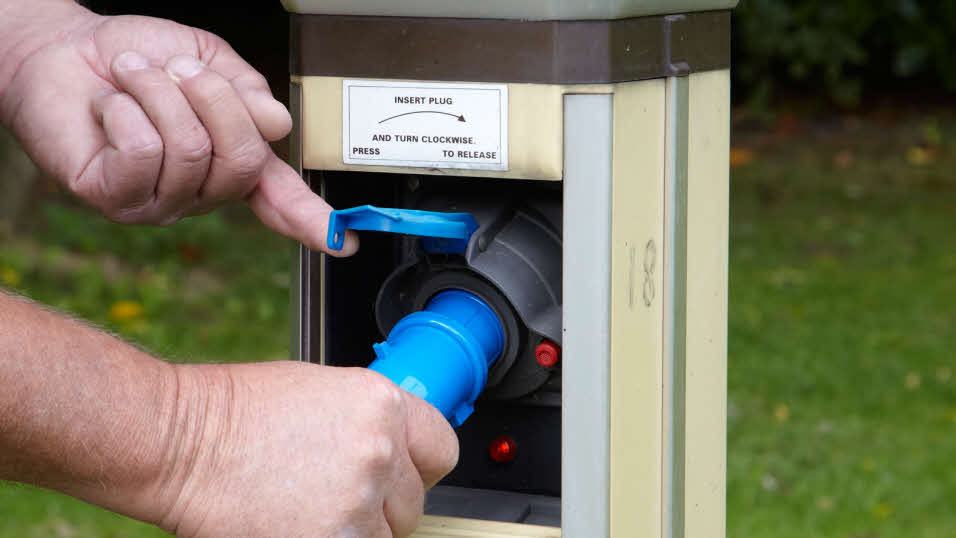 Known in campsite reception as branchement, and then when you look uncomprehending as électricité, hook-ups often have proper international blue connectors just like at home and all is OK. Sometimes they will have a standard domestic socket, so if you worry about having power (and it’s a good way of saving gas) then make sure you can cobble together an adaptor with a French domestic plug on one end and a hook-up socket on the other to receive your normal hook-up cable. The power output of hook-ups is often modest, so while fridges and battery charging won’t be a problem, hair-driers and electric kettles might be.
Some people (especially on internet forums) worry deeply about something (incorrectly) called “reverse polarity”. I’m not going to offer advice here, but simply tell you what I, as an engineering graduate, do about reverse polarity. The answer is very simple – I do nothing. I don’t worry or even think about it. I don’t check for it, or try to correct it. I just plug in and use the power. In all the years and all the places I have been, I simply exercise sensible caution with electrical connections and have never had any problems.
Random thoughts
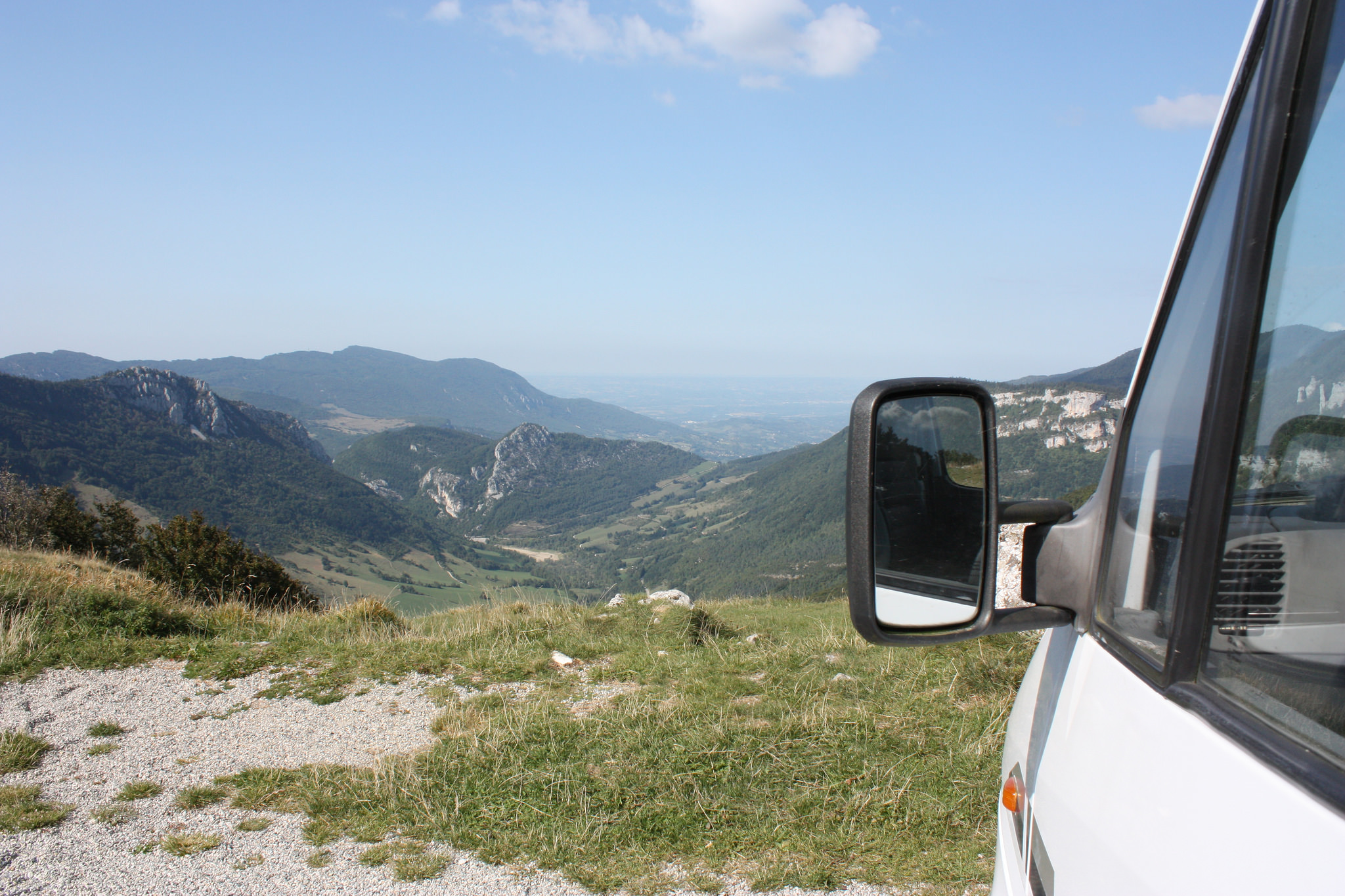 Don’t over-plan, and don’t tie yourself down to a tight schedule. As you travel you will see interesting sights, find fascinating towns you’ve never heard of and stop at wonderful places. Take the opportunity to relax, be spontaneous and explore. Very often our plan is simply “go South at Calais” – the detail will emerge as we go, depending on what we see, how we feel, and what the weather brings.
Years ago, travelling with the three children, we saw a signpost and made a spontaneous decision whilst we were driving to return from Hungary via Slovakia rather than Austria as initially intended. We had no currency, map or camping guide for that country. It was before the days of GPS and the Internet. We bought a map at a garage, and headed for what looked like an attractive part of the country where people might camp, in the hope that we would stumble across a camp site. We didn’t find one, but spent a peaceful night in a lay-by, separated from the road by apple trees, with the pup tent pitched outside the VW camper. We continued with our educational trip through the makeshift border with the Czech Republic and then through what had been East Germany, throwing in a trip round the VW factory at Wolfsburg. None of this was planned, but we all enjoyed a great practical learning experience about European geography, history and politics, as well as the vagaries of CV joints on VW campers when subjected to rough concrete roads.
Another time we headed into the centre of Paris in the Friday night rush hour, parked right at the base of the Eiffel Tower, spent a couple of hours looking at the view as the sun went down, and when we’d finished wondered what to do for the night. We just headed out of town, past the airport, and as the roads became smaller, we had an opportunity to park in a lay-by. It looked a little different and more inhabited in the daylight, but no problems.
Try to stay legal. In Hungary we were stopped by a policeman who pointed out a random 30kph limit sign at some abandoned roadworks. He indicated that he thought we were speeding. If I gave him the equivalent of around £5 he would be happy. We each spoke around 6 words of German, but not the same ones, so having seen how low the stakes were, I just played dumb and showed him all our documents. In the end he ran out of ideas, and wished us a good holiday.
Take opportunities to keep water tanks full and waste tanks (black and grey) empty, and make sure you have a belt-and-braces solution for gas. Be sensible and considerate, and take reasonable but not obsessive security precautions.
Talk to others you meet on your travels – they’ll give you ideas on places to go and sights to see. Nowadays Google is invaluable. I often browse at lunch time and in the evening to learn about our location, and what is of interest in the area. A couple of years ago that led us to a fascinating tour of Canadian WW1 trenches. Lunch and tea time stops are good for selecting the destination for the night, once you have some idea of how travel for the day will go. Google, paper maps and perhaps the France Passion Guide will provide the coordinates for the GPS, but if something interesting comes up before your destination, be flexible.
Above all, enjoy and don’t worry – it will be OK.